World War II and the Holocaust
World War II and the Holocaust (1940–1945)
Nazi Occupation and Anti-Jewish Measures
When Nazi Germany invaded Belgium on May 10, 1940, Antwerp was home to one of the largest Jewish communities in Western Europe, with approximately 50,000–55,000 Jews living in the city. Many were immigrants or refugees from Eastern and Central Europe, and only a minority held Belgian citizenship.
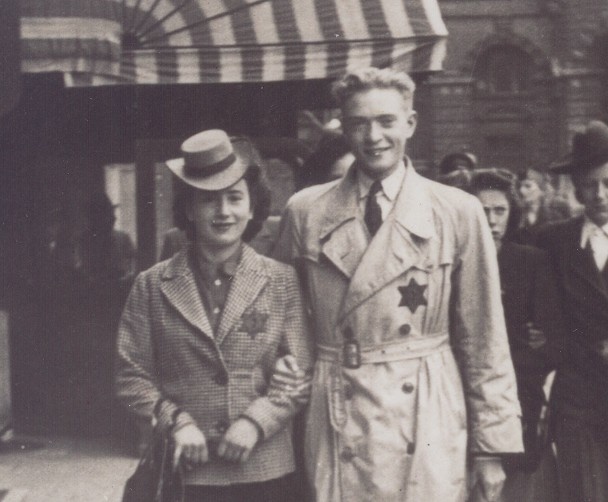
Under German occupation, anti-Jewish legislation was implemented rapidly. Jews were required to register, were excluded from numerous professions, and had businesses confiscated or “Aryanized.” In 1942, Jews were forced to wear the yellow Star of David. Restrictions on movement, employment, and public life intensified as the occupation progressed.
The Antwerp Pogrom (April 1941)
On 14 April 1941, violent anti-Jewish riots erupted in Antwerp in what became known as the Antwerp Pogrom. The violence followed the screening of the antisemitic Nazi propaganda film Der Ewige Jude (“The Eternal Jew”). After the film, members of collaborationist and far-right groups, including activists associated with the VNV (Flemish National Union), marched into Jewish neighborhoods and carried out coordinated attacks.
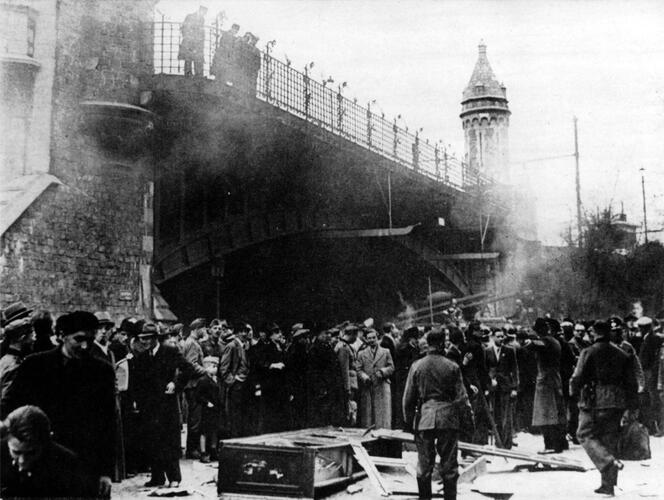
Synagogues were vandalized and burned, Torah scrolls were desecrated, Jewish homes and businesses were looted, and individuals were assaulted in the streets. The residence of Antwerp’s Chief Rabbi, Marcus Rottenberg, was also attacked. The violence occurred in the presence of German occupation authorities and marked a significant escalation in anti-Jewish persecution in the city.
Although mass deportations had not yet begun, the pogrom demonstrated the increasing vulnerability of Antwerp’s Jewish population and foreshadowed the systematic arrests and deportations that would follow the next year.
Raids and Deportations
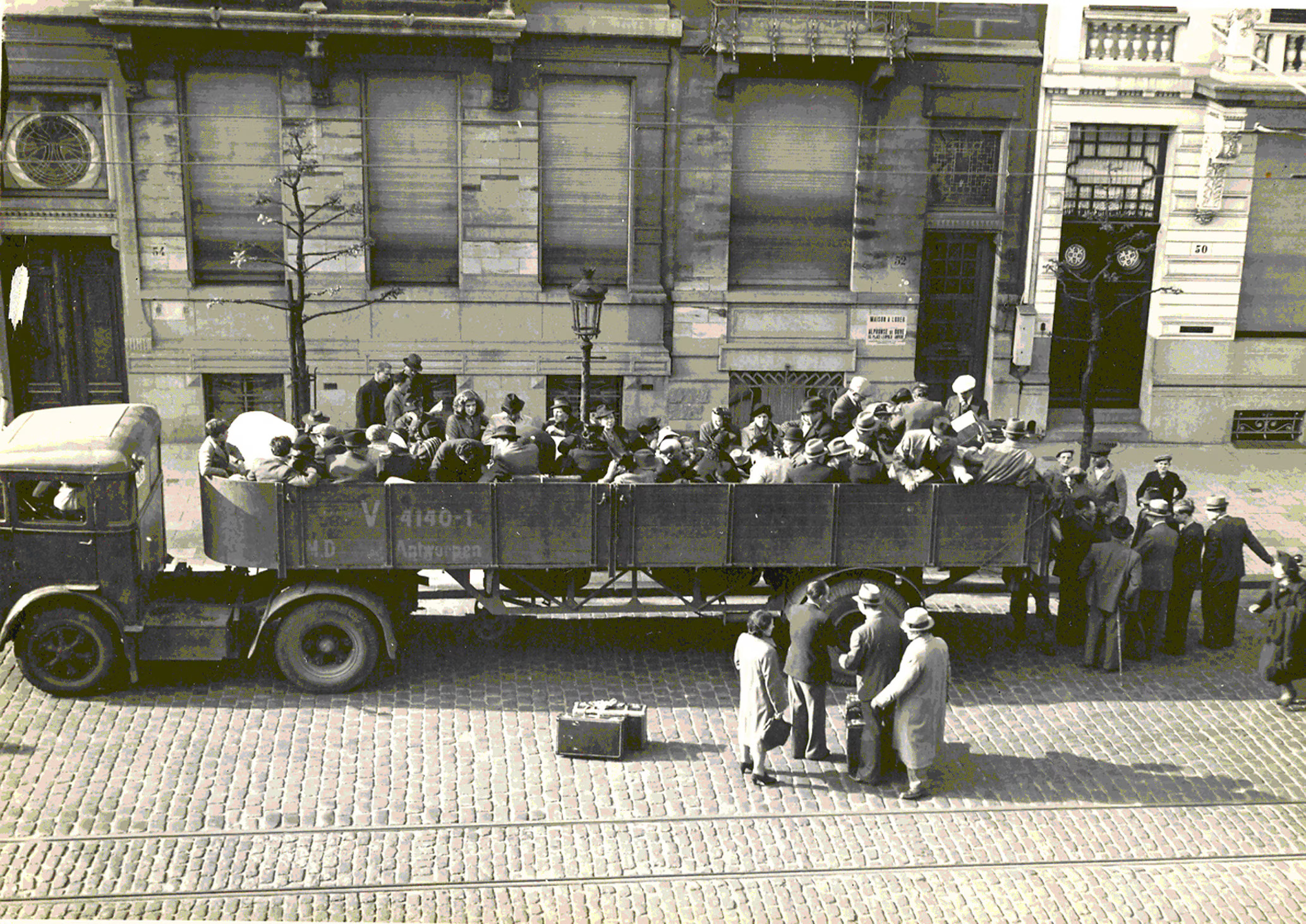
Beginning in the summer of 1942, the persecution escalated into systematic deportations. Antwerp became a major site of large-scale round-ups (razzias), often carried out with the involvement of local police. During the night of 15–16 August 1942, the first major raid resulted in the arrest of approximately 845 Jews. They were transferred to the Dossin Barracks transit camp in Mechelen (Malines) and subsequently deported to Auschwitz-Birkenau.
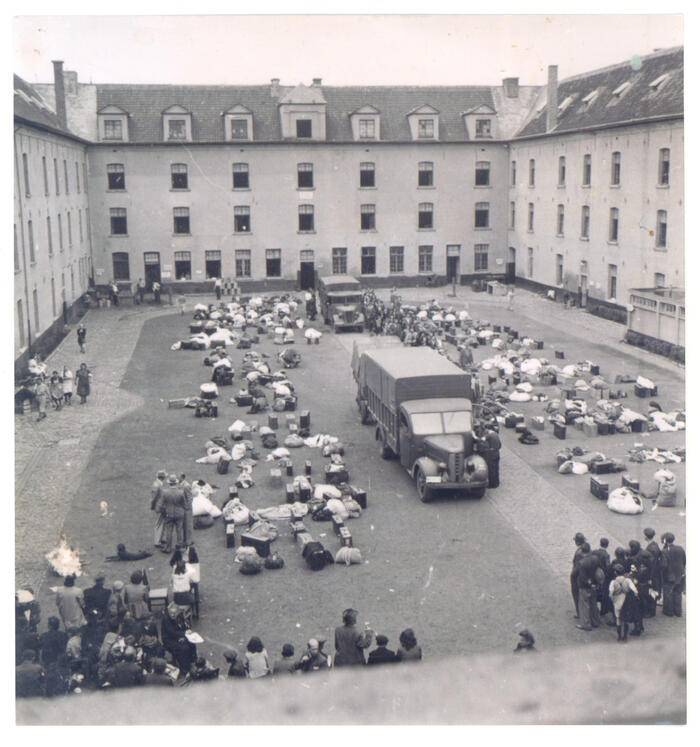
Further raids followed in August and September 1942, leading to the arrest and deportation of thousands of Antwerp Jews. Between August 1942 and July 1944, 28 deportation convoys left from the Dossin Barracks, transporting more than 25,000 Jews from Belgium to extermination camps. Only a small fraction survived.
Antwerp’s Jewish community suffered particularly heavy losses. Due to the concentration of Jews in identifiable neighborhoods and the efficiency of deportation efforts, a higher percentage of Antwerp Jews were deported compared to the national average.
Hiding, Resistance, and Survival
Not all Jews were deported. Some managed to flee Belgium before the mass arrests began, particularly during the early months of the occupation. Antwerp, as a major port city, had long served as a point of emigration, and a number of Jewish refugees sought visas to the United States, British Mandate Palestine, and several Latin American countries, including Cuba. While Cuba was not a primary destination for Antwerp’s Jewish population, a small number of Antwerp-linked refugees and diamond merchants established themselves there, reflecting the wider dispersion of the city’s prewar commercial networks. Others escaped over land through France and Spain to neutral countries such as Switzerland or Portugal. However, once borders tightened and deportations intensified from 1942 onward, opportunities for escape became extremely limited.
Acts of resistance in Belgium included efforts to disrupt deportations, most notably the April 1943 attack on the Twentieth Convoy, during which resistance members helped free Jewish deportees from a transport train.
Liberation
Antwerp was liberated by Allied forces on September 4, 1944. By that time, the once-thriving Jewish community had been devastated. The majority of Antwerp’s Jews had been deported and murdered. Survivors returned to a city where homes, businesses, and communal institutions had often been confiscated or destroyed.
References
- Schmidt, E. (1994). Geschiedenis van de Joden in Antwerpen. Antwerpen: Excelsior.
- Michman, D. (1998). Belgium and the Holocaust: Jews, Belgians, Germans. Jerusalem: Yad Vashem.
- Saerens, L. (2000). Vreemdelingen in een wereldstad: een geschiedenis van Antwerpen en zijn joodse bevolking (1880-1944). Tielt: Lannoo.
- Vromen, S. (2008). Hidden Children of the Holocaust: Belgian Nuns and their Daring Rescue of Young Jews from the Nazis. Oxford University Press.