The Portuguese Synagogue of Antwerp, located on Hoveniersstraat, stands as the spiritual heart of the Sephardic community. It represents a rich tradition of Spanish and Portuguese Jewry that found refuge and flourished in the city.
Architecture & Design
Built in 1913, the synagogue features a distinct Neo-Romanesque style with Byzantine influences, setting it apart from other synagogues in Antwerp. The interior is known for its elegant simplicity, featuring dark wooden pews and a traditional layout centered around the Tebah (Bimah).
Historical Information
The synagogue was commissioned to serve the growing community of Sephardic Jews, many of whom were involved in the diamond trade. Miraculously, the building survived the Second World War with relatively minor damage compared to others, allowing it to continue serving the community almost continuously for over a century.
Community Life
The synagogue follows the Western Sephardic rite (Minhag Amsterdam/London). It remains an active center for prayer and community gatherings, maintaining unique liturgical traditions and melodies that date back centuries.
1981 Synagogue Bombing
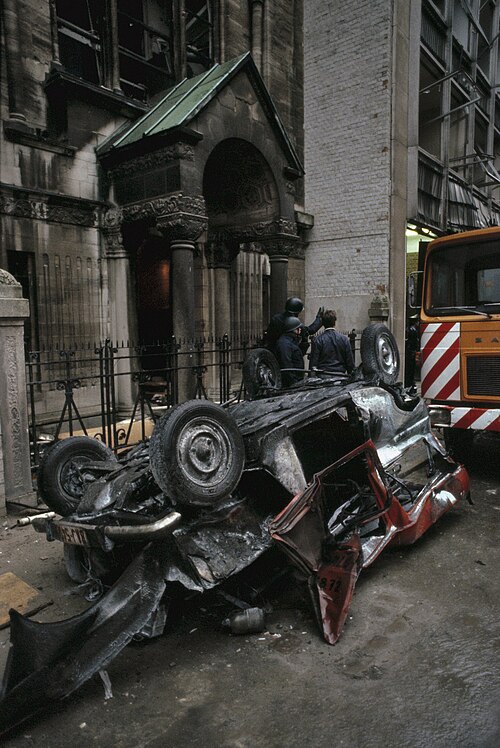
Aftermath of the bombing on Hoveniersstraat
On the morning of October 20, 1981, tragedy struck the heart of Antwerp's Diamond District. Shortly after 9:00 AM, just minutes before Simchat Torah services were scheduled to begin, a massive truck bomb exploded outside the Portuguese Synagogue. The blast claimed the lives of three people and left 106 others wounded.
The bomb had been concealed in a delivery truck that was parked overnight with a wheel removed, staging a breakdown. The force of the explosion was devastating, blowing in the synagogue's heavy doors and intricate stained-glass windows, and shattering storefronts for blocks around. Only the vehicle's axles and debris remained.
Investigations revealed the truck was purchased by a man using the alias "Nicola Brazzi," believed to be of Lebanese origin. While the Palestinian terrorist group Black September claimed responsibility, the investigation saw various turns, including the arrest of neo-Nazi suspects and later, in 2008, the arrest of a suspect in Canada linked to both this attack and the 1980 Paris synagogue bombing.
Prime Minister Mark Eyskens condemned the act as "diabolically wicked." It occurred just one year after a similar attack in Paris and followed a hand grenade attack on Jewish schoolchildren in Antwerp just months prior, marking a dark period for the community that ultimately strengthened their resolve and unity.