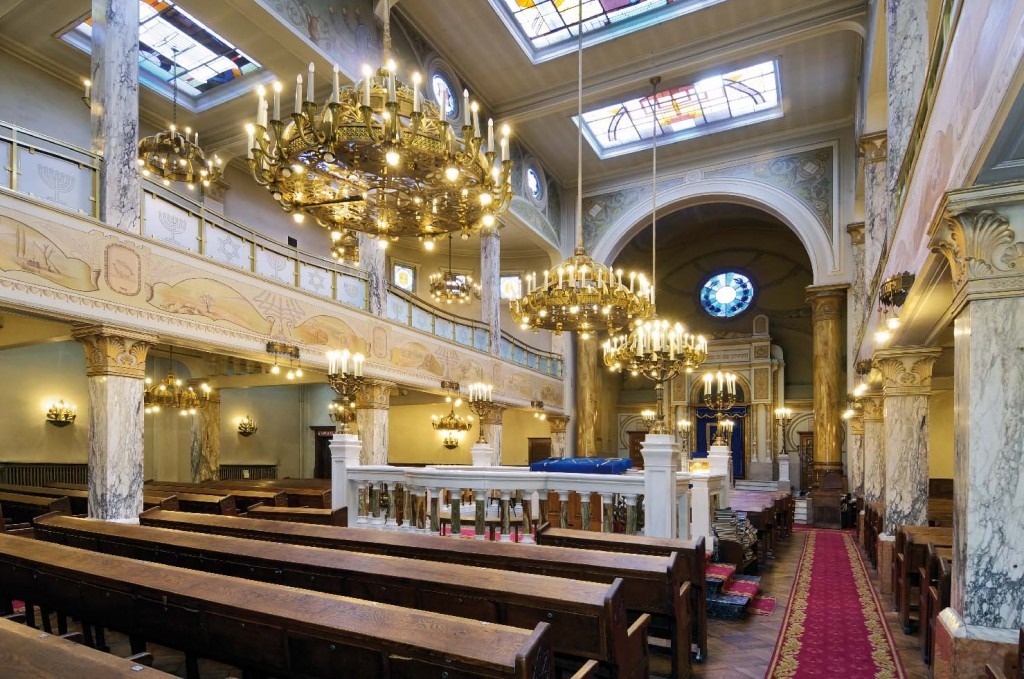
The Oosten Synagogue, known as the grand shul of the Machsike Hadass kehillah, stands as one of the most historically significant Jewish houses of prayer in Antwerp. For over a century, it has served as a central gathering place for Torah, tefillah, and communal life, and its history closely mirrors that of the broader Orthodox Jewish community of Antwerp.
Early Foundations and Construction
The origins of the Oosten Synagogue are closely tied to the formation of the Machsike Hadass kehillah, established in 1892 when six smaller batei midrash in Antwerp united to form a single Orthodox community.
Key figures in the founding of the kehillah included:
- R’ Avraham Ullman – early communal leader and brother of the future dayan Harav Noach Tzvi Ullman
- R’ Yosef Blitz
- R’ Shulem Feiner
- R’ Hershel Krengel
- R’ Yitzchak Tzvi Ratzersdorfer
- R’ Yaakov Eisenman
By 1910, the community received official recognition from the Belgian authorities.
In 1912, land on Oosten Street was purchased to build a central synagogue complex, which would include both a main beis haknesses and a beis medrash. The construction was entrusted to the firm Vooruitzicht, under the supervision of Jules Hoffman.
The design was ambitious: a large synagogue capable of holding approximately 1,000 worshippers, with an ezras nashim gallery and adjoining study halls. The architectural style was notably Art Nouveau, distinguishing it from many other European synagogues of the time.
Early Growth and Community Leadership
The synagogue officially began functioning after World War I, once construction was completed and the building was made usable for prayer.
During its early decades, the shul became a spiritual hub for Antwerp Jewry. It attracted immigrants from across Eastern and Central Europe, each bringing different minhagim and traditions.
Prominent rabbinic and communal figures associated with the shul and kehilla included:
- Harav Mordechai Rottenberg zt”l hy”d – leading Rav of the kehillah prior to WWII
- Harav Noach Tzvi Ullman zt”l – dayan of the community
- R’ Shlomo Klagsbald z”l – president of the kehillah after the war, instrumental in rebuilding communal life
- R’ Yonah Hertz – longtime gabbai and central figure in the postwar shul community
Musical and Spiritual Life
The Oosten Synagogue was also known for its strong chazzanut tradition. Notable cantors and musicians included:
- R’ Yossele Rosenblatt z”l, who visited Antwerp and davened in the shul
- R’ Moshe Koussevitzky z”l, who performed in the shul in the 1930s
- R’ Yaakov Guzman z”l, who participated in the Chanukas Habayis
- R’ Yehudah Leib Muller, who also served as chazzan
The synagogue choir was led by Aryeh Leib Gantman z”l, a former Russian military officer who later became a baal teshuvah and immigrated to Antwerp. He led the shul’s musical tradition until his tragic passing after falling from the choir gallery.
World War II and Destruction
During the Nazi occupation of Belgium, the Oosten Synagogue suffered severe destruction. In 1940–1941, anti-Jewish violence reached Antwerp’s Jewish quarter.
The shul was desecrated: Torah scrolls were thrown into the streets, sacred books were destroyed, and parts of the building were set on fire. The Rav’s residence adjacent to the synagogue was also burned.
Despite this devastation, brave individuals—including members of Bnei Akiva—managed to rescue several Sifrei Torah.
Postwar Rebuilding
After the liberation of Belgium in 1944–1945, surviving members of the community returned to find the shul severely damaged.
Under the leadership of figures such as R’ Shlomo Klagsbald, efforts began to restore Jewish communal life. Although many institutions had been lost or taken over during the war, the Oosten Synagogue gradually returned to functioning as a central place of prayer.
Over the following decades, attendance once again grew, particularly during the Yomim Noraim, when the shul filled to capacity.
The 1963 Fire and Reconstruction
In April 1963, a fire broke out in the synagogue building after a matzah oven in the basement overheated. The fire caused extensive damage, particularly to the Beis Medrash.
Key responders included:
- Harav Chaim Yaakov Rottenberg, who alerted emergency services and attempted to save sacred items
- Community leaders who organized immediate recovery efforts
Following the fire, a major reconstruction project was undertaken. The adjacent building (number 42) was incorporated into the synagogue complex, expanding its facilities and modernizing its infrastructure.
The restored shul reopened in 1965, continuing its role as the spiritual center of the Machsike Hadass community.
Modern Restoration and Preservation
In the early 21st century, the building was recognized as a protected historical monument due to its architectural and cultural significance as one of the few remaining Art Nouveau synagogues in Europe.
A major restoration project began in 2019, led by heritage specialists and supported by government funding and Jewish communal organizations. The project included:
- Full structural renovation
- Restoration of stained glass windows
- Repair of murals and decorative artwork
- Modern safety upgrades while preserving historical authenticity
The restoration was completed in the early 2020s.
Recent Milestones
In 2022 (כ״ב אלול תשפ״ב), a grand Chanukas Habayis ceremony marked the reopening of the renovated synagogue, with a festive procession returning the Sifrei Torah.
In 2023, the shul hosted an official appreciation event attended by senior government officials, including the Prime Minister of Belgium, members of parliament, the Mayor of Antwerp, and diplomatic representatives.
Legacy
Today, the Oosten Synagogue remains a living monument to over a century of Jewish life in Antwerp. It stands not only as a place of prayer, but as a symbol of endurance—having survived growth, war, destruction, and renewal.
Its story is inseparable from the history of Machsike Hadass and the broader Antwerp Jewish community.
Community Archive