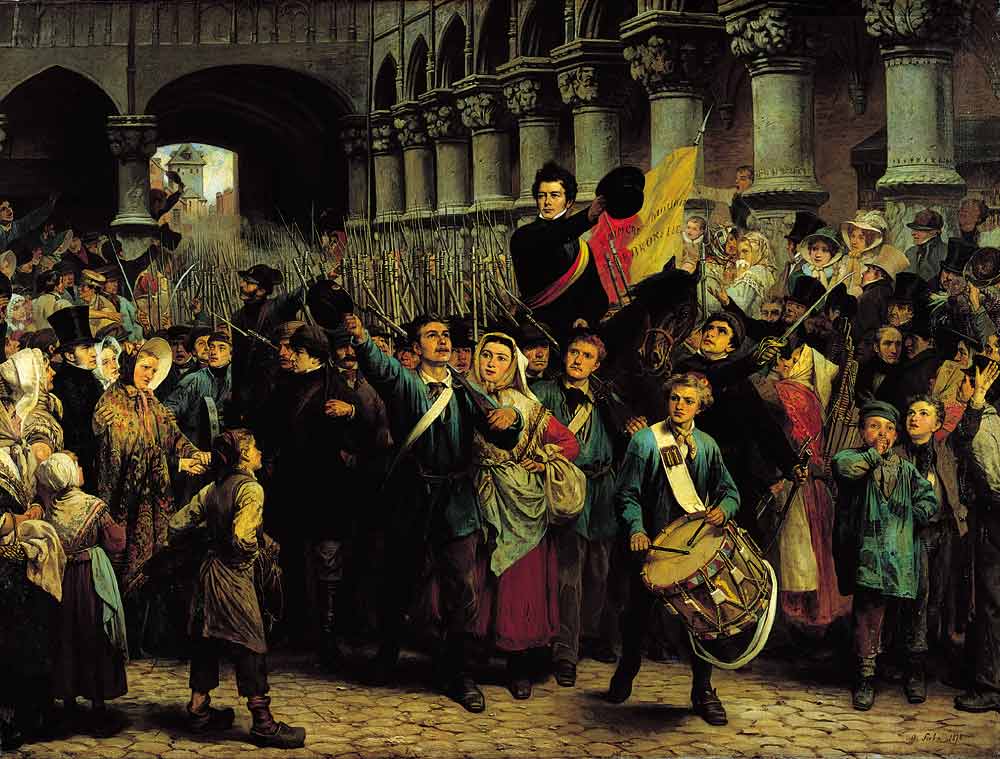
Overview: The Belgian Revolution was the conflict which led to the secession of the southern provinces from the United Kingdom of the Netherlands and the establishment of an independent Kingdom of Belgium.
The Revolution and Jewish Emancipation
The Belgian Revolution of 1830 not only redrew the political map of Europe but also marked a crucial turning point for the Jewish population in the region. Under the United Kingdom of the Netherlands, Jews had faced various restrictions. The revolution, fueled by liberal ideas, promised religious freedom and civic equality.
The new Belgian Constitution, drafted in 1831, was one of the most progressive of its time. It established the separation of church and state, guaranteed freedom of worship, and ensured that citizens could not be discriminated against based on their religion. For the Jewish community, this meant full civic emancipation and the official recognition of Judaism as a state-sanctioned religion.
Official Recognition
In 1831, the Consistoire Central Israélite de Belgique (Central Jewish Consistory of Belgium) was established as the official representative body of the Jewish community before the Belgian state. The government began funding Jewish clergy and religious education, treating the Jewish community on equal terms with the Catholic and Protestant denominations. This official status allowed the Jewish community in Antwerp and Brussels to build synagogues, establish schools, and organize communal institutions with state support, setting the stage for the growth of Jewish life in the 19th and 20th centuries.