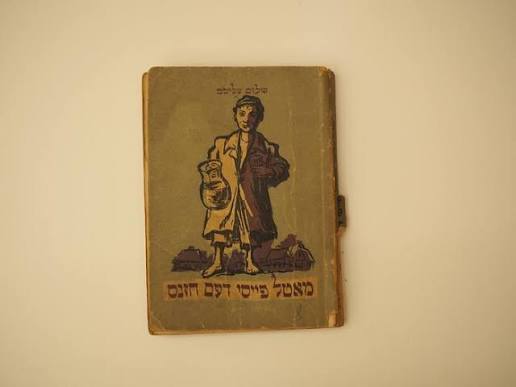
When people think of Sholem Aleichem, they usually think of Tevye the Dairyman, the beloved character whose stories later inspired the world-famous musical Fiddler on the Roof. Through Tevye, Sholem Aleichem became one of the most influential voices of Jewish life in Eastern Europe, preserving the language, humor, and struggles of the Jewish shtetl for future generations. The musical Fiddler on the Roof, first performed in 1964, was based on his Tevye stories and introduced millions of people worldwide to the world of Eastern European Jewry.
Less well known, however, is another of Sholem Aleichem's masterpieces: Motl Peysi dem Khazns (Motl, the Cantor's Son), his final and unfinished novel. Written between 1907 and 1916, the book follows the young Motl and his family as they leave their impoverished shtetl in Eastern Europe and embark on the long journey to America. The novel vividly captures one of the defining experiences of modern Jewish history: mass emigration from Eastern Europe to the United States.
Sholem Aleichem and Antwerp
The connection between Sholem Aleichem and Antwerp was not merely literary. After leaving the Russian Empire in the wake of the 1905 pogroms, he spent years traveling throughout Europe, including time in Belgium. During these years he supported himself through public readings of his works before Jewish audiences across the continent.
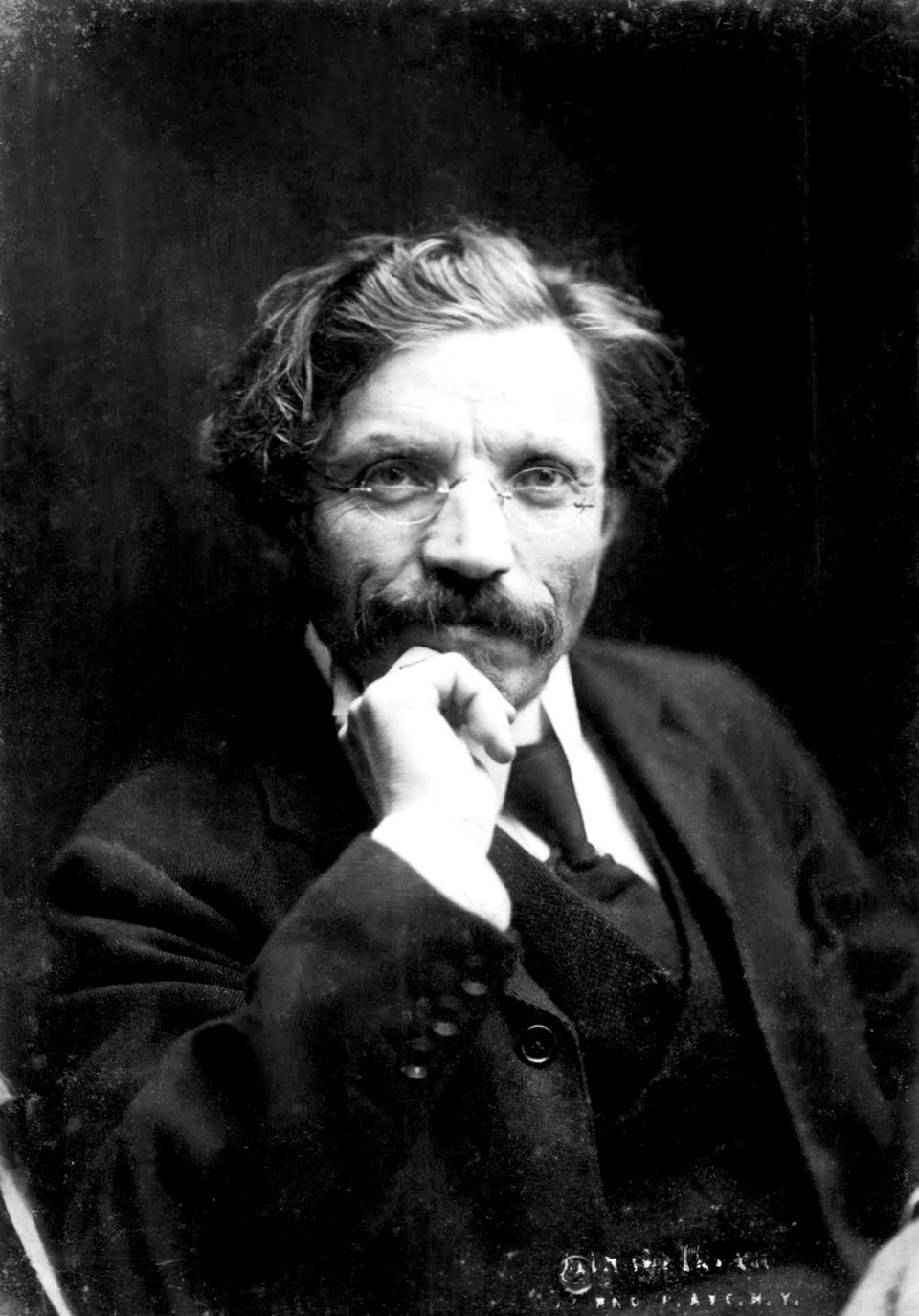
Most notably, in January 1914, Sholem Aleichem visited Antwerp during one of his European reading tours. Contemporary reports describe how a crowd of around a thousand people gathered at Antwerp's Cercle Artistique to hear the celebrated Yiddish writer read from both his famous works and unpublished manuscripts. The event demonstrates the city's importance as a center of Jewish life on the eve of the First World War.
This visit is especially significant because Antwerp also appears prominently in Motl the Cantor's Son. Whether inspired by his own observations, by conversations with emigrants, or by both, Sholem Aleichem's depiction of Antwerp is remarkably vivid and authentic.
Antwerp: Gateway to America
Between the 1880s and the First World War, hundreds of thousands of Jewish emigrants from the Russian Empire, Galicia, and other parts of Eastern Europe passed through Antwerp on their way to North America. The city's port became one of the most important departure points for transatlantic migration. Jewish aid organizations, shipping companies, and an expanding Jewish community grew alongside this migration movement.
In Motl the Cantor's Son, Antwerp is not merely a stop on the journey. It is portrayed as a bustling international crossroads filled with emigrants waiting for ships, undergoing medical inspections, searching for relatives, and dreaming of a new life across the ocean.
The young Motl is immediately struck by the city. One of his first observations concerns its cleanliness. He marvels that the streets are washed and scrubbed, a sight that would have appeared extraordinary to many immigrants arriving from small towns in Eastern Europe. At the same time, he notices that the emigrant quarters are crowded, noisy, muddy, and full of people from every corner of the Jewish world.
The Human Side of Migration
What makes the Antwerp chapter so valuable is its focus on ordinary people.
Motl encounters families separated by immigration regulations, children stranded while waiting for permission to sail, and emigrants who have spent months or even years trying to reach America. One particularly moving story concerns a young girl named Goldele, whose family was allowed to continue to America while she was forced to remain behind in Antwerp because doctors discovered she suffered from trachoma, a contagious eye disease.
Such stories were not fiction alone. During this period, American immigration authorities rigorously screened arriving passengers for diseases such as trachoma. Many emigrants found themselves delayed, rejected, or separated from family members as a result. Sholem Aleichem's account reflects the real anxieties faced by thousands of migrants passing through Antwerp on their way to the United States.
Jewish Aid Organizations in Antwerp
Another fascinating aspect of the chapter is Motl's description of an institution known as the "Cura."
The Cura serves as a place where emigrants receive assistance, information, clothing, medical help, and support while awaiting departure. Motl describes staff members helping travelers, recording information, distributing aid, and caring for vulnerable migrants.
Although presented through the eyes of a fictional child, the institution closely resembles the Jewish charitable organizations that operated in Antwerp during the migration era. Historical records show that Jewish relief organizations played a crucial role in assisting the thousands of Eastern European Jewish emigrants arriving in Antwerp with little money and few connections.
The chapter reminds us that Antwerp was not merely a port. It was also a place where Jewish communities organized extensive networks of assistance for those seeking a better future.
Jewish Life in Antwerp
Motl's Antwerp is unmistakably Jewish.
He hears Yiddish spoken throughout the city and encounters fellow Jews from dozens of different towns and regions. He even visits what he calls a "Turkish synagogue," likely a reference to Antwerp's Sephardic community, whose traditions appeared exotic and unfamiliar to many Ashkenazi immigrants from Eastern Europe.
These brief observations provide a rare glimpse into the diversity of Jewish life in Antwerp at the beginning of the twentieth century.
A Literary Window into Antwerp's Past
Today, Motl the Cantor's Son remains one of the most important literary accounts of Jewish migration from Eastern Europe to America. Through humor, compassion, and the unique voice of a child narrator, Sholem Aleichem preserved the experiences of countless migrants whose journeys passed through Antwerp.
For historians of Jewish Antwerp, the chapter "Wonders of Antwerp" offers something especially valuable: a contemporary literary portrait of the city as it appeared to Jewish emigrants more than a century ago. Through Motl's eyes, we see Antwerp not simply as a port city, but as a place of waiting, uncertainty, hope, and new beginnings.
The chapter is made even more remarkable by the fact that Sholem Aleichem himself stood before an audience in Antwerp in January 1914, only two years before his death. The same city that welcomed thousands of Jewish migrants on their way to America also welcomed the greatest Yiddish writer of his generation.
For many Jewish families who left Eastern Europe, Antwerp was the last stop before the New World. In the pages of Motl the Cantor's Son, their experiences — and Antwerp's place in that journey — live on.
References
- Internet Archive: Motl Peysi dem Khazns (Yiddish Edition).