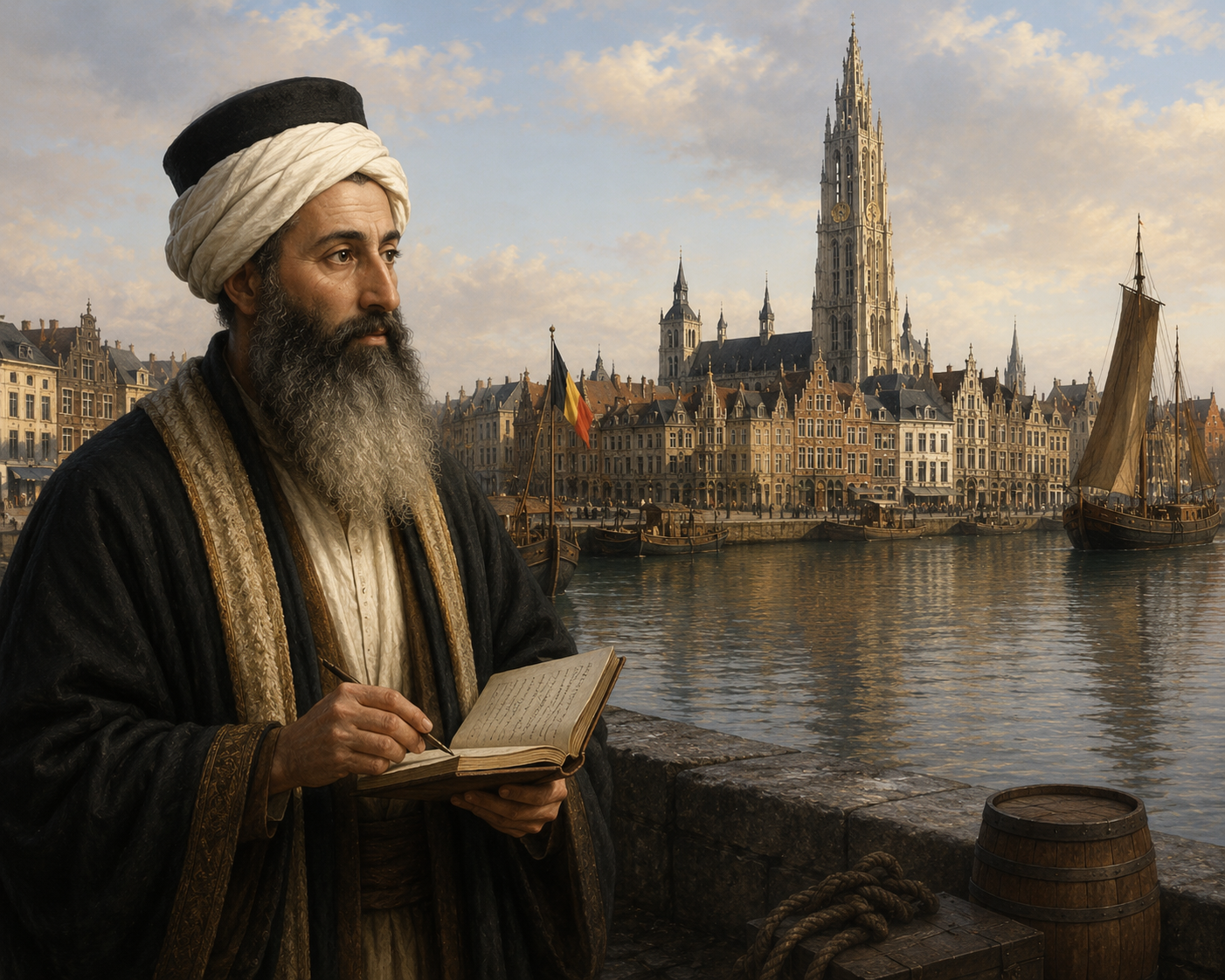
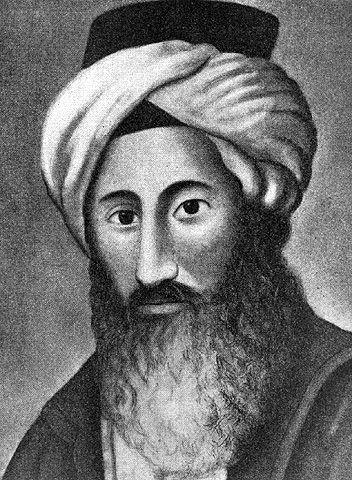
When Rabbi Chaim Yosef David Azulai (1724–1806), universally known as the Chida, traveled across Europe as an emissary of the Jewish community of Hebron, he left behind one of the most remarkable Jewish travel accounts of the eighteenth century. His diary, Ma'agal Tov, offers a rare firsthand glimpse into Jewish life, travel conditions, and society throughout Europe.
Among the many places he visited were the cities of the Austrian Netherlands—today's Belgium—including Brussels, Antwerp, and Mechelen. His observations provide valuable evidence for the history of Jewish life in the region decades before the establishment of the modern Belgian state.
Arrival in the Austrian Netherlands
After leaving France, the Chida entered the Austrian Netherlands and passed through the fortified city of Mons. He noted the numerous guards, customs inspections, and military fortifications that characterized the border regions. Unlike many other crossings he had experienced, the authorities inspected his passport and allowed him to proceed without opening his luggage.
The journey was often difficult. Inns varied greatly in quality, and the Chida frequently complained about dishonest innkeepers, poor roads, and unexpected expenses. Nevertheless, he generally formed a favorable impression of the local population.
Brussels: A Beautiful Capital
On Friday afternoon, the Chida arrived in Brussels. His description of the city is among the most enthusiastic in Ma'agal Tov.
He admired its broad streets, elegant buildings, and impressive public squares. He specifically described a large central plaza and the palace of the Emperor, surrounded by magnificent architecture. The city struck him as prosperous and refined.
The Chida also recorded hearing about Brussels' famous textile and manufacturing industries, which were renowned throughout Europe. He was told of large workshops producing fine goods and skilled craftsmanship.
While in Brussels, he visited the home of Lipman Nathan, a local Jewish resident who assisted Jewish travelers passing through the city. The Chida would later encounter him again during his travels.
Jewish Life in Antwerp
From Brussels, the Chida continued to Antwerp, then an important commercial center within the Austrian Netherlands.
His account provides one of the earliest firsthand descriptions of Jewish life in eighteenth-century Antwerp. Although the Jewish population was still small, it was clearly organized enough to assist travelers and maintain communal connections.
The Chida spent the Sabbath in Antwerp with a local Jew identified as Rabbi Ze'ev (Zelig). During his stay, he learned that other Jewish visitors were present in the city. Together they assembled a minyan, allowing communal prayer to take place.
The Chida records:
"We also prayed Mincha and Ma'ariv with a minyan, blessed be God."
This brief statement is historically significant. It demonstrates that Antwerp possessed a sufficient Jewish presence to assemble a quorum for prayer, an important indicator of communal life.
The Chida also delivered words of Torah during his stay, turning what might otherwise have been a routine stop into a meaningful religious gathering.
Curiosity in the Streets of Antwerp
While in Antwerp, the Chida observed local curiosity toward foreign Jewish travelers. He records that approximately twenty people gathered to watch and speak with members of his party in the street.
The incident appears to have been more curious than hostile. One of the travelers accompanying the Chida conversed and joked with the spectators, attracting attention but causing no serious disturbance.
This passage provides a fascinating glimpse into how visibly Jewish travelers were perceived in eighteenth-century Antwerp, where encounters with visitors from the Mediterranean Jewish world were likely uncommon.
A Kind Hostess
The Chida also praised the woman who managed the inn where he stayed in Antwerp. He describes her as exceptionally kind and honorable, noting the respect and compassion she showed toward her guests.
Such comments are relatively rare in travel literature of the period and suggest that his experience in Antwerp was generally positive.
Winter Roads and Travel Difficulties
Preparing to continue northward toward the Dutch Republic, the Chida encountered a familiar obstacle: transportation.
He sought to hire a carriage to Moerdijk, the gateway to Holland, but found prices extremely high. Local residents explained that winter travel was notoriously difficult. Roads were often covered with mud and water, rivers could freeze, and journeys required teams of multiple horses.
These practical details provide a vivid picture of eighteenth-century travel, reminding modern readers how arduous even relatively short journeys could be.
The Mechelen Incident
One of the most famous episodes from the Chida's journey through Belgium occurred not in Antwerp, as is sometimes claimed, but in Mechelen.
After leaving Brussels, the Chida's party arrived in the city, where a large crowd gathered around them. He reports that hundreds of gentiles assembled, laughing, shouting, and staring at the travelers.
The situation became tense enough for the Chida to describe it as dangerous. Although the incident eventually passed without violence, it clearly left a strong impression on him.
This distinction is important. The Chida's own account separates the relatively mild curiosity he encountered in Antwerp from the much larger and more troubling crowd he faced in Mechelen.
References
- Rabbi Chaim Yosef David Azulai: Ma'agal Tov (HebrewBooks).