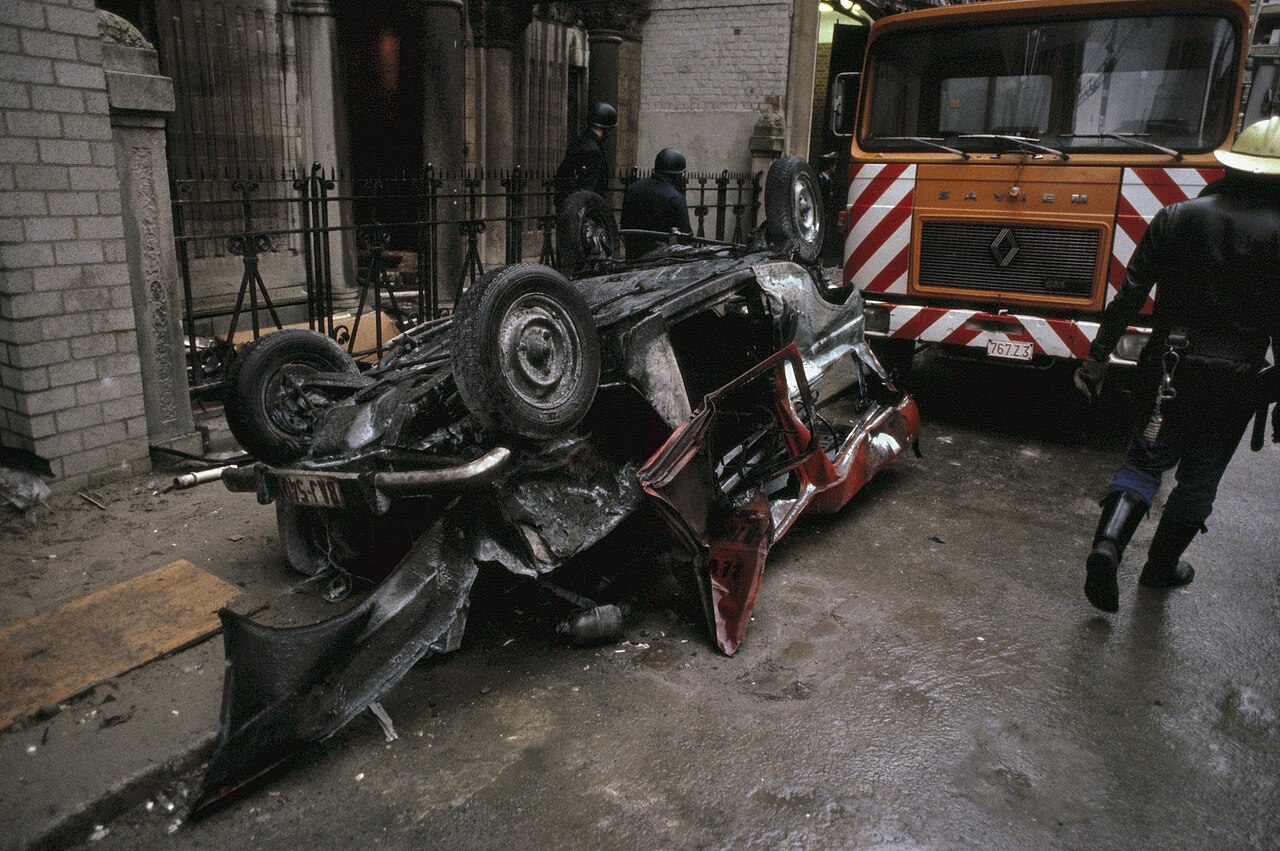
Overview: In October 1981, the city of Antwerp in Belgium experienced a violent and tragic bombing that shook both its Jewish community and the nation as a whole. A vehicle filled with explosives detonated near a synagogue in the heart of Antwerp’s diamond district just before a planned religious service. The explosion killed several people, injured many more, and caused extensive structural damage — making it one of the most serious attacks on Jewish residents in Belgium’s post‑war history.
The Morning of the Bombing
On the morning of 20 October 1981, a delivery truck laden with explosives was parked on Hoveniersstraat, a busy street in Antwerp’s diamond quarter that was also home to a small Portuguese synagogue. Just minutes before religious services were to start, the bomb inside the truck exploded with tremendous force.
The blast was powerful enough to destroy the truck, blow out windows, and severely damage nearby buildings within several hundred meters. Streets were quickly filled with smoke, dust, and debris, and the shock of the blast was felt throughout the neighborhood.
Casualties and Community Impact
The explosion claimed the lives of three people, including two women who died instantly and a third victim who succumbed to injuries later. More than 100 people were wounded, with many suffering from glass cuts, shrapnel injuries, and other trauma caused by flying debris.
Although the bomb went off shortly before services and the synagogue itself was not full of worshippers, the timing and location made the attack especially horrifying for Antwerp’s Jewish community. Buildings across the diamond quarter — a hub of Jewish life and commerce — were badly damaged, leaving many residents traumatized and sparking widespread fear.
Claims of Responsibility and Investigation
In the aftermath, multiple groups were reported to have claimed involvement. A call to a news agency said the bombing was carried out by an unknown group and was meant as a warning to authorities, though police were skeptical of that claim. Separately, another anonymous call alleged that Black September — a Palestinian guerrilla group previously linked to international terrorist acts — was responsible, though the group had effectively disbanded years earlier.
Investigators traced elements of the case back to a van purchased under a false identity, but no conclusive suspect was ever publicly charged or convicted. Despite years of inquiry, the precise identity and motive of the person or group that planted the bomb ultimately remained unresolved.
Reactions and Aftermath
Belgian leaders swiftly condemned the attack. Prime Minister Mark Eyskens described it as a violent assault on the Jewish community and urged unity against hatred and intolerance. The Israeli Embassy in Brussels also denounced the bombing and attributed it to acts of terrorism targeting Jewish people.
In response to the bombing and similar attacks, Belgium’s Jewish institutions heightened their own security measures, and discussions intensified about the need for stronger protection of religious and ethnic minorities. The attack also remained a painful reminder of rising antisemitic violence in Europe during that period.
Legacy
The 1981 synagogue bombing in Antwerp stands as a tragic milestone in the city’s history. It not only inflicted loss of life and serious injuries but also left a lasting psychological impact on the Jewish community and the wider public. The scale of the attack and its location in a bustling commercial district highlighted the vulnerability of urban minority communities to politically motivated violence. Remembering what happened is seen as key to honoring the victims and preventing similar tragedies in the future.
References
-
Wikipedia
— “1981 Antwerp synagogue bombing”
Overview of the attack, including details on the victims, perpetrator, and immediate aftermath.
-
Jewish Telegraphic Agency —
“Two Persons Killed, More Than 100 Injured Outside Synagogue in Antwerp”
Immediate reporting on the casualties and the scene of the explosion.
-
United Press International —
“A powerful car bomb exploded outside a synagogue in Antwerp”
News report from the day of the bombing describing the explosion and initial reaction.
-
United Press International —
“Palestinian guerrillas claim synagogue bombing”
Report on the claims of responsibility made in the aftermath of the attack.
-
Morasha — “Antisemitism in
Belgium”
Broader context of antisemitic incidents and trends within Belgium.